
By Lane Afable, News Editor
Senator Francis “Kiko” Pangilinan called for the urgent need to strengthen domestic biofertilizer production as a strategic response to looming fertilizer shortages and rising costs in light of escalating tensions in the Middle East, including their potential impact on global agricultural supply chains.
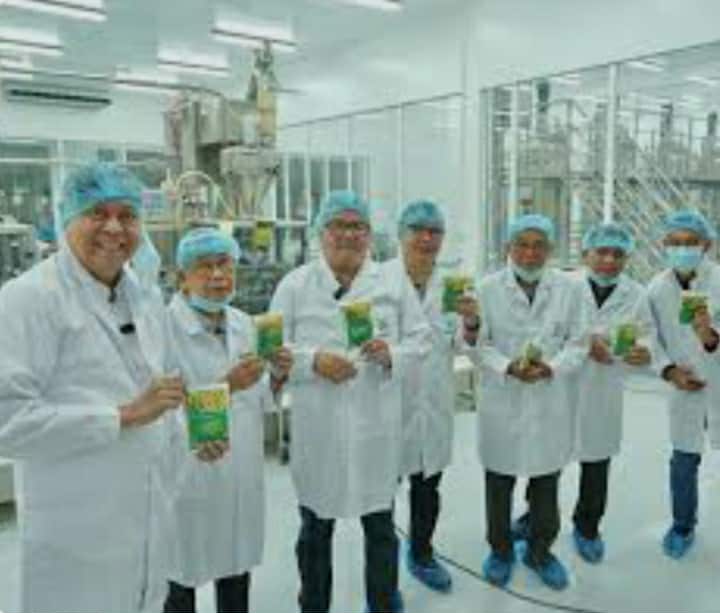
The senator visited the AgriSpecialist, Inc. (ASI) Bio N Manufacturing Plant in Santa Rosa, Laguna last week.
ASI is a high-tech modern biofertilizer production facility that produces world-class biofertilizer domestically.
Noting that the ongoing conflict in the Middle East has disrupted critical supply routes and contributed to volatility in the global fertilizer market, Pangilinan lamented the significant challenges this poses to farmers who already face high input costs.
“We must reduce our dependence on imported chemical fertilizers. Hindi dapat sa tuwing may sigalot sa Middle East at krisis sa enerhiya at langis, ang ating mga magsasaka, mangingisda, at mamimili ang unang-unang natatamaan.
“Gutom at kahirapan ang magiging resulta kapag patuloy tayong magiging vulnerable sa mga sitwasyon na ito,” the lawmaker said.
“By investing in and promoting biofertilizer production, we not only cushion ourselves from global supply shocks but also empower our agricultural sector to become more resilient and sustainable,” he added.
Biofertilizers are derived from beneficial microorganisms, and offer an environmentally friendly and cost-effective alternative to conventional chemical fertilizers.
According to Pangilinan, expanding local production can help stabilize prices, improve soil health, and increase crop yields over time.
In particular, Bio N is proven to reduce synthetic nitrogen fertilizer use by 30% to 50%, directly addressing the urea supply and cost crisis faced by farmers. This microbial biofertilizer was developed by the University of the Philippines-Los Baños.
The researchers said the particular variant of the biofertilizer can increase yield and produce healthier crops such as corn and vegetables, improve soil health and sustainability, make plants healthy and green even in drought and in the presence of pests, and reduce the incidence of rice tungro and corn earworm attack.
Pangilinan called on relevant government agencies, including the Department of Agriculture, to scale up research, provide incentives to local producers, and facilitate training programs for farmers on the use of biofertilizers.
He also encouraged public-private partnerships to accelerate innovation and ensure widespread availability across the country.
“Now more than ever, we must prioritize long-term solutions that protect both our farmers’ livelihoods and our nation’s food supply,” he said.