By Lane Afable, News Editor
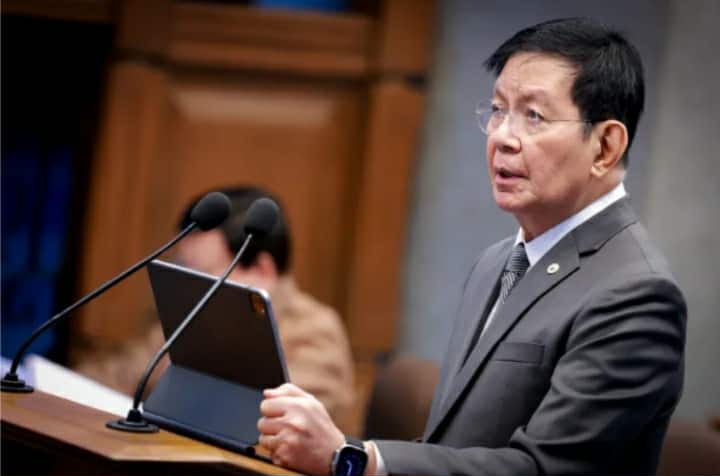
The Senate Blue Ribbon Committee is to transmit to the Department of Justice and the Office of the Ombudsman the evidence it has so far gathered in its investigation into the flood control mess, Senate President Pro Tempore and Blue Ribbon Panel Chairman Panfilo “Ping” M. Lacson said Wednesday.
Lacson said the pieces of evidence – including documents, testimonies and transcripts – are now a matter of public record after he cited them in his privilege speech Tuesday.
“Moving forward, I ordered the preparation of a transmittal letter to the Office of the Ombudsman to give all pieces of evidence – documentary, testimonial, and transcripts. It is now a matter of public record as I cited them in my privilege speech,” he said in a mix of English and Filipino at the Kapihan sa Senado forum.
He said that while he did not make the evidence public before his privilege speech because this may violate the rules of the Senate, his speech paved the way for the evidence to be used by the DOJ and Ombudsman in their case-building efforts.
In an interview on DZBB radio, Lacson said the evidence includes a handwritten note by the late Department of Public Works and Highways (DPWH) Undersecretary Ma. Catalina Cabral showing Sen. Rodante Marcoleta requested P500 million in “allocables” for infrastructure projects.
“Based on requests for allocables, the late Usec Cabral allocated P500 million in projects to Sen. Marcoleta. The document is not among those in the possession of the Ombudsman so we will furnish a copy to them,” he said.
When asked at the Kapihan if Marcoleta would be recommended for investigation, Lacson said not at this time.
“Sa ngayon hindi. Kung may ghost na attributed sa kanya, kung may participation siya sa naging ghost or substandard (Not at this time. If there are ghost projects attributed to him),” he said.
The committee had sought to remove allocables and “leadership funds” as they paved the way for corruption.
It will also verify additional flood control projects in the Visayas and Mindanao to see how widespread the corruption behind such projects is.
“We will zero in on allocables given due course by the DPWH. We’ll zero in on projects that are defective and substandard.
Allocables are not illegal per se but I personally believe it’s not appropriate for legislators to request projects from the implementing agency,” he said.
He also said the committee is seeking to encourage “horizontal and vertical convergence” for projects, involving coordination with local government agencies and the implementing agencies, instead of whimsically requesting allocables for favored contractors to implement.
Asked if the Blue Ribbon panel would hold another hearing before the Senate adjourns sine die on June 6, he said there is a “big possibility.”
“We’re consolidating the documents to make sure the next hearing covers issues not covered by the previous hearings.
“Allocables could be one issue, especially if we find allocable-funded projects that are substandard or ghost,” he said.