
By Lane Afable, News Editor
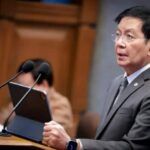
Senator Francis “Kiko” Pangilinan expressed deep concern over the reported 13.7% rice inflation rate for April 2026 and raised fears of price manipulation and profiteering amid the spike.
The senator and chair of the Senate Committee on Agriculture, Food, and Agrarian Reform, called on the government to go after profiteers, hoarders, and abusive traders behind a possible rice price manipulation.
“Nakakaalarma ang ganitong kataas na inflation rate at rice inflation rate dahil direkta ang epekto nito sa ating mga mamimili, mga mangingisda, at magsasaka. Isa na naman itong dagok sa araw-araw na kahirapan na dinadanas ng ating mga kababayan,” he said.
“Dapat tingnan maigi ng gobyerno kung paano at saan nagmula ang mataas ng rice inflation dahil sinabi mismo ng DA (Department of Agriculture) na meron tayong sapat na supply ng bigas hanggang Hunyo,” he added.
Pangilinan, who has led multiple committee hearings on agriculture smuggling, the rice tariffication law, and the impact of the Middle East crisis on the country’s food supply system, pointed out that the 13.7% rice inflation rate may be artificial.
This, after the DA said in a media interview that the country has enough rice supply until June.
He explained that price manipulation violates the Anti-Economic Sabotage Act, the Consumer Act of the Philippines, and the Price Act, among others.
According to the Philippine Statistics Authority (PSA), the country’s headline inflation spiked to 7.2% in April 2026, marking a three-year high and a significant jump from the recorded 4.1% last month.
The rapid rise was driven by food and transport inflation, with food inflation at 6.1%, up from 2.7% in March 2026. The food and non-alcoholic beverages index accounts for 31.9% of the total increase, making it the single largest contributor to the overall inflation.
The PSA identified the rice and corn crisis as one of the primary drivers of the uptick in the inflation rate, noting that rice inflation surged to 13.7% in April 2026 from 3.5% in March. Corn inflation, on the other hand, is at 21%.
In particular, Pangilinan bemoaned the impact of inflation on food prices, as the agriculture and fisheries sector bears the brunt of higher production costs and a market saturated with imported goods.
He added that the continued rise in prices of basic goods and services is further straining ordinary Filipinos, especially low-income households, who are already struggling to make ends meet.
Crestita Edquila, a 50-year-old resident of Dasmariñas City, Cavite, manages a four-person household.
“Sobrang taas (ng presyo). Nahihilo ako sa taas ng presyo,” she said when asked about her recent food purchase. “Matagal na nating alam na mataas ang inflation.”
Edquila recounted that back in 2023 to 2024, she could buy fish, meat, chicken, and vegetables for P2,000 to cover their food needs for a week. Today, her P3,500 budget can barely cover their household’s meals for a week.
Pangilinan, who champions strengthening local food production to ensure national food security, underscored the need to stabilize food supplies and reduce dependence on imports, as the impact of the Middle East conflict has contributed to the country’s food and fuel crisis.
He reiterated his call for increased investment in local agriculture, including direct support for farmers through subsidies, access to affordable credit, and improvements in farm-to-market infrastructure.
The lawmaker has been working closely with relevant government agencies to fully implement his 2019 Sagip Saka Act, which allows the national and local governments to purchase food directly from farmers and fisherfolk without public bidding.
The law provides expanded market access, empowering farmers’ and fisherfolk’s cooperatives to enter into negotiated contracts with the government worth millions of pesos.
“Ang solusyon sa inflation ay hindi lamang nakadepende sa pagkontrol sa presyo ng pagkain at iba pang pangangailangan. Higit sa lahat, dapat natin palakasin ang lokal na produksyon ng pagkain at siguraduhin na may sapat na suporta para sa ating mga magsasaka at mangingisda na may pangunahing papel sa seguridad sa pagkain,” Pangilinan said.
He also urged relevant government agencies to enhance monitoring mechanisms to prevent price manipulation and hoarding, and to ensure that existing assistance programs reach those most affected by rising costs.
As inflation continues to pose a significant economic challenge, the senator called for a whole-of-government approach to mitigate its impact and safeguard the welfare of Filipino households.
Currently, Pangilinan is pushing for twin measures—the renationalization of agricultural extension services and the reestablishment of the Bureau of Agriculture Cooperatives—to reform and modernize the country’s agriculture and fisheries sectors.