By Lane Afable, News Editor
Japan has pledged to beef up its defense cooperation with the Philippines through the provision of military equipment and technology aimed at enhancing the Philippine forces’ capabilities.
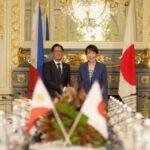
The commitment was made after a summit meeting between President Ferdinand R. Marcos Jr. and Japanese Prime Minister Sanae Takaichi in Tokyo, Japan on Thursday.
In a joint statement, the two nations committed to step up collaboration to facilitate the transfer of defense equipment, including destroyers, TC-90 aircraft and radar systems.
This was in accordance with the two nations’ Agreement concerning the Transfer of Defense Equipment and Technology and the Official Security Assistance (OSA), a collaborative effort to enhance defense capabilities and strengthen security cooperation.
Takaichi reaffirmed Tokyo’s commitment to contributing to the capacity building of the Armed Forces of the Philippines (AFP), especially in the maritime area.
The two leaders vowed to advance cooperation in defense sector to support the development of mutually beneficial industrial capabilities, enhance supply chain resilience, and contribute to interoperability and long-term defense readiness.
The Philippines welcomed Japan’s newly revised Three Principles on Transfer of Defense Equipment and Technology and its implementation guidelines, acknowledging that such efforts contribute to regional peace and stability.
Marcos and Takaichi recognized that the closer cooperation between their defense authorities in recent years has laid “a robust foundation for their bilateral partnership.”
They agreed to the early convening of the next Philippines-Japan ‘2+2′ (Foreign and Defense Ministerial Meeting) to strengthen strategic coordination and ensure effective high-level policy discussions.
Maritime cooperation
Both leaders also stressed the need to advance maritime cooperation, considering that the Philippines and Japan are “neighbors connected by the sea.”
They acknowledged that enhancing maritime cooperation, underpinned by respect for international law, promotes peace, stability, and mutual trust.
Marcos also expressed gratitude to Japan over its continued support in enhancing Philippine Coast Guard’s capabilities through the provision of patrol ships.
The two leaders vowed to promote mutual exchanges between the maritime law enforcement agencies through joint training and capacity-building activities aimed at ensuring maritime safety and upholding the rule of law in the Indo-Pacific.
Lawful navigation of seas
They also emphasized the importance of upholding freedom of navigation and overflight, lawful uses of the sea, unimpeded commerce, and the peaceful resolution of maritime disputes, in accordance with international law, particularly the United Nations Convention on the Law of the Sea (UNCLOS).
This comes as they expressed “serious concern” over the situation in the East China Sea and the South China Sea (SCS), reaffirming their “strong opposition to any unilateral attempts to change the peacefully established status quo by force or coercion.”
Marcos and Takaichi reaffirmed the universal and unified character of UNCLOS as the comprehensive legal framework governing all activities in the oceans and seas.
They also acknowledged the need to come up with an “effective and substantive” Code of Conduct (COC) to “effectively govern the behavior of parties at sea” without prejudice to the legitimate rights and interests of all actors navigating the SCS.
“The two leaders reiterated their support for the 2016 South China Sea Arbitral Award, which is final and legally binding on the parties to the dispute,” the joint statement read.
“Noting that 10 years have passed since the issuance of the Award, the two leaders reaffirmed the importance of international law and compliance of the parties to the dispute with decisions and rulings duly-rendered through compulsory dispute settlement mechanisms under UNCLOS.”
The two leaders also cited the importance of promoting peace and stability across the Taiwan Strait and a peaceful resolution of cross-Strait issues through dialogue.