
By Lane Afable, News Editor
The Philippines has entered the final stretch of preparation for its bid for a non-permanent seat to the United Nations Security Council (UNSC), with the elections set to take place on June 3.
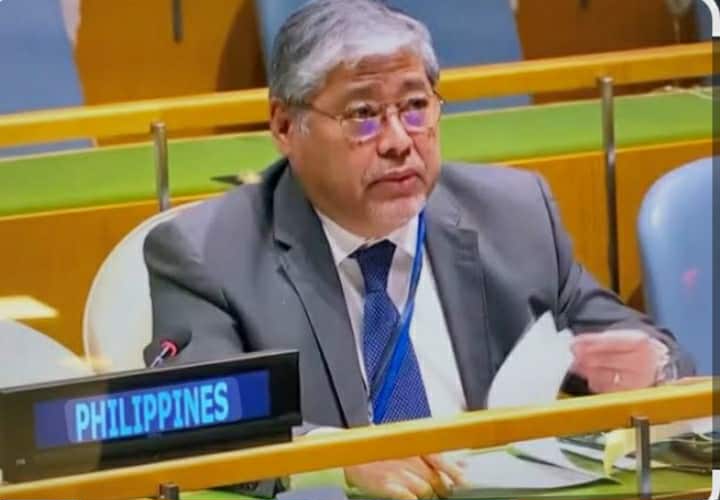
At the 8th UNSC Election Debate for Asia-Pacific Group candidates on May 20, Permanent Representative to the UN in New York Enrique Manalo said Manila brings both “experience and a practical approach” to Security Council work, highlighting the country’s 80 years of contribution to the UN across peace and security, development and human rights.
“The Philippines approaches the responsibility of serving on the Security Council with experience, a proven track record, and a clear focus on strengthening cooperation and advancing practical outcomes,” he said as quoted in a news release Friday.
Should it secure enough votes, Manalo said Manila is ready to serve as a “reliable partner, an innovative pathfinder, and a committed peacemaker” in addressing evolving international peace and security challenges across the world.
He emphasized that the Philippines’ candidature is guided by the conviction that “multilateralism works best when it is inclusive, principled, and grounded in cooperative action.”
During the debate, he outlined a long list of priorities he said Manila would advance if elected, including upholding the primacy of the UN Charter and the rule of law.
The country, he said, would also strengthen peace-keeping, peace-making, and peace-building efforts as well as the women, peace and security agenda; address the connection between climate action, humanitarian response, and international peace and security; promote stronger cooperation between the UNSC and regional organizations; and support a “more transparent, inclusive, accountable, and responsive” council.
The Philippines and Kyrgyzstan are seeking the sole seat UNSC allocated for the Asia-Pacific Group for the term 2027-2028.
The May 20 debate featured an interactive exchange with member states and representatives of civil society organizations, who raised questions on ways to address growing disregard for international law and the UN Charter and approaches for sustainable peace and security in Africa.
It also tackled measures to ensure the meaningful inclusion of women-led organizations in political mediation and peace processes during the candidates’ Council term.
The UNSC is composed of five permanent and 10 non-permanent members, and holds the responsibility for the maintenance of international peace and security.
The UN General Assembly, on June, 3 will elect five non-permanent members, also known as the incoming five (I-5), to replace the outgoing members whose terms conclude at the end of 2026.
Aside from the Philippines and Kyrgyzstan, also seeking UNSC seats are Austria, Germany and Portugal for the Western European and Others Group (WEOG).
Trinidad and Tobago and Zimbabwe are the candidates for seats allocated to their respective regional groups, the Latin American and Caribbean Group (GRULAC) and the African Group (AfG), respectively.