
By Lane Afable, News Editor
The Department of Agriculture (DA) has prepositioned various interventions for farmers facing looming El Niño threats, reflecting its commitment to safeguard the country’s food security and the local farmers’ livelihoods amid the dry spell.
Agriculturist Julius Briones of the DA Regional Field Office 1 said that necessary support, including agricultural inputs and technical assistance, will be provided to farmers affected by El Niño to help maintain their productivity.
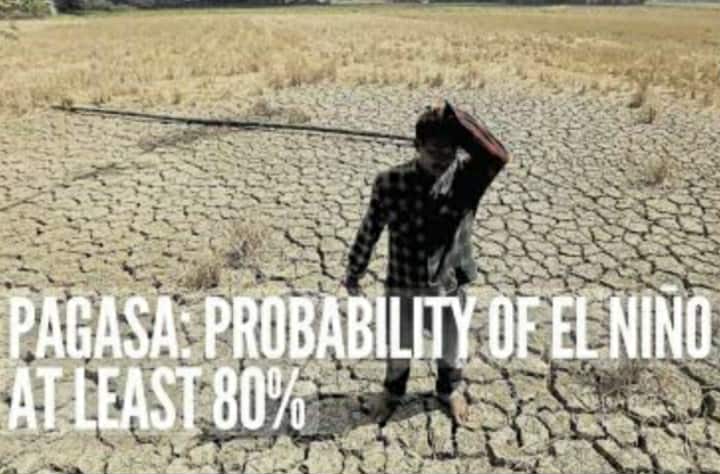
El Niño is expected to start developing between June and August, according to the Philippine Atmospheric, Geophysical, and Astronomical Services Administration (PAGASA), which will bring below normal rainfall to the country.
“Based on our monitoring, the region currently has 77,000 hectares of farmland with standing rice crops and 16,000 corn crops, which are vulnerable to El Niño,” Briones said during a Pre-Disaster Risk Assessment (PDRA) meeting of the Regional Disaster Risk Reduction and Management Council (RDRRMC) Ilocos.
Stockpiles of buffer seeds in the Ilocos Region include 7,000 kilograms (kg) of rice seeds, 35,766 kg of hybrid seeds and 363,636 kg of certified seeds, along with 14,000 kg of white corn seeds and 42,642 kg of yellow corn seeds. Aside from staple crops, there are 600 kg of seeds of high-value crops available in stock.
DA also prepared 3,604 bottles of pesticides and other biological control agents for distribution as crops during the dry season are prone to pests and diseases.
Meanwhile, farmers are urged to use early maturing or drought-tolerant crop varieties; adopt water-saving technologies like the alternate wetting and drying; practice soil moisture conservation measures; and do rainwater harvesting and small water impoundments.
They are also encouraged to enroll in crop insurance policies in vulnerable and hot spot areas through the Philippine Crop Insurance Corporation (PCIC) to ensure assistance if crops fail during extreme weather conditions.
The government remains steadfast in improving farm resilience by implementing various mitigating measures. With interventions and strategies already in place, public cooperation is vital in minimizing possible losses and securing agricultural productivity