By Lane Afable, News Editor
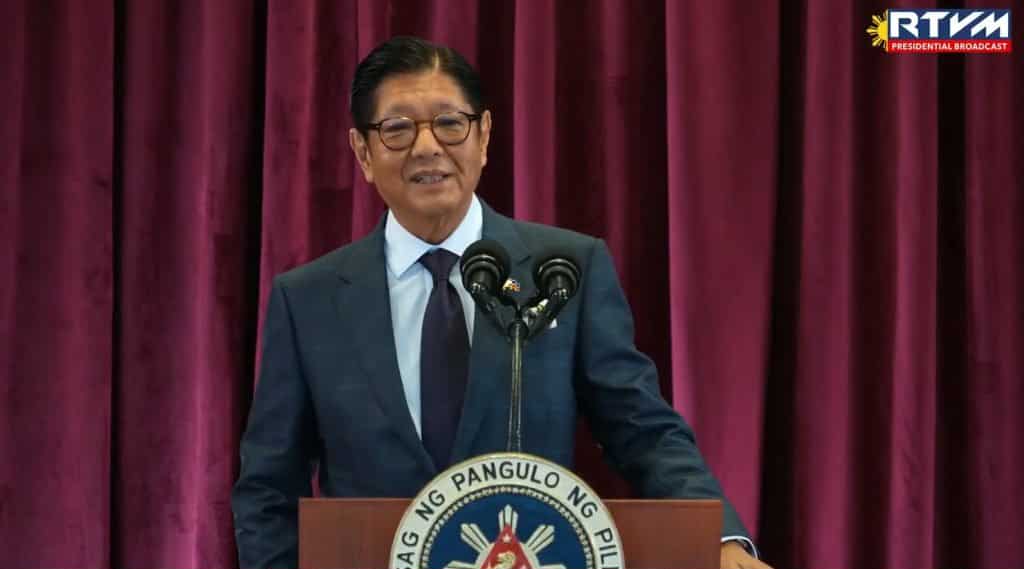
President Ferdinand R. Marcos Jr. has underscored the strong defense and security cooperation, as well as the Philippines’s enduring economic partnership, with Japan as the country navigates the rapidly evolving global geopolitical landscape.
Highlighting the significance of his four-day state visit, President Marcos said in his departure statement: “This State Visit to Japan is essential amid an increasingly challenging and evolving global environment.”
“It forms part of a broader foreign policy agenda to forge closer political ties, stronger defense and security cooperation, and more enduring economic partnerships with major countries in the region in order to advance the interests of the Filipino people, while promoting regional peace, stability, and prosperity.”
The President said he and Prime Minister Takaichi Sanae will witness the signing and exchange of an important agreement in trade and investment, and announce key bilateral initiatives in security and maritime cooperation during the visit.
President Marcos said the Philippines’ defense and security partnership with Japan has deepened in recent years through the forging of new agreements such as the Reciprocal Access Agreement (RAA) signed in 2024 and the Acquisition and Cross-Servicing Agreement (ACSA) signed in 2026.
Japan has likewise extended grants under its Official Security Assistance (OSA) programs in 2023, 2024, and 2025, which support the Armed Forces of the Philippines (AFP) Modernization Program.
In terms of bilateral trade and official development assistance (ODA), the President said Japan has been consistent in its commitment to uphold the same values aligned with the Philippine economic and development priorities.
“Japan is also the first country which signed a bilateral free trade agreement with the Philippines through the Philippines-Japan Economic Partnership Agreement or PJEPA,” said President Marcos.
Japan has extended assistance to the government’s Build Better More infrastructure programs, such as the first phase of the Metro Manila Subway Project, and the construction of the North-to-South Commuter Railway Project that will connect Malolos and Tutuban.
It also supported the rehabilitation of the Metro Rail Transit (MRT) Line 3, and the construction of the Central Mindanao High Standard Highway Project that will connect Cagayan de Oro and Malaybalay.
Similar assistance was given by Japan to the development of Mindanao through grants in projects such as the establishment of the Basilan, Sulu, and Tawi- Tawi Wireless Backbone Network.
“I believe we can further expand our security, economic, and development cooperation in order to enhance our national defense posture and to uplift the standard of living of Filipinos in different parts of the country,” said the President.
President Marcos’s state visit to Japan coincides with this year’s commemoration of the 70th anniversary of the normalization of the Philippine-Japan diplomatic relations.